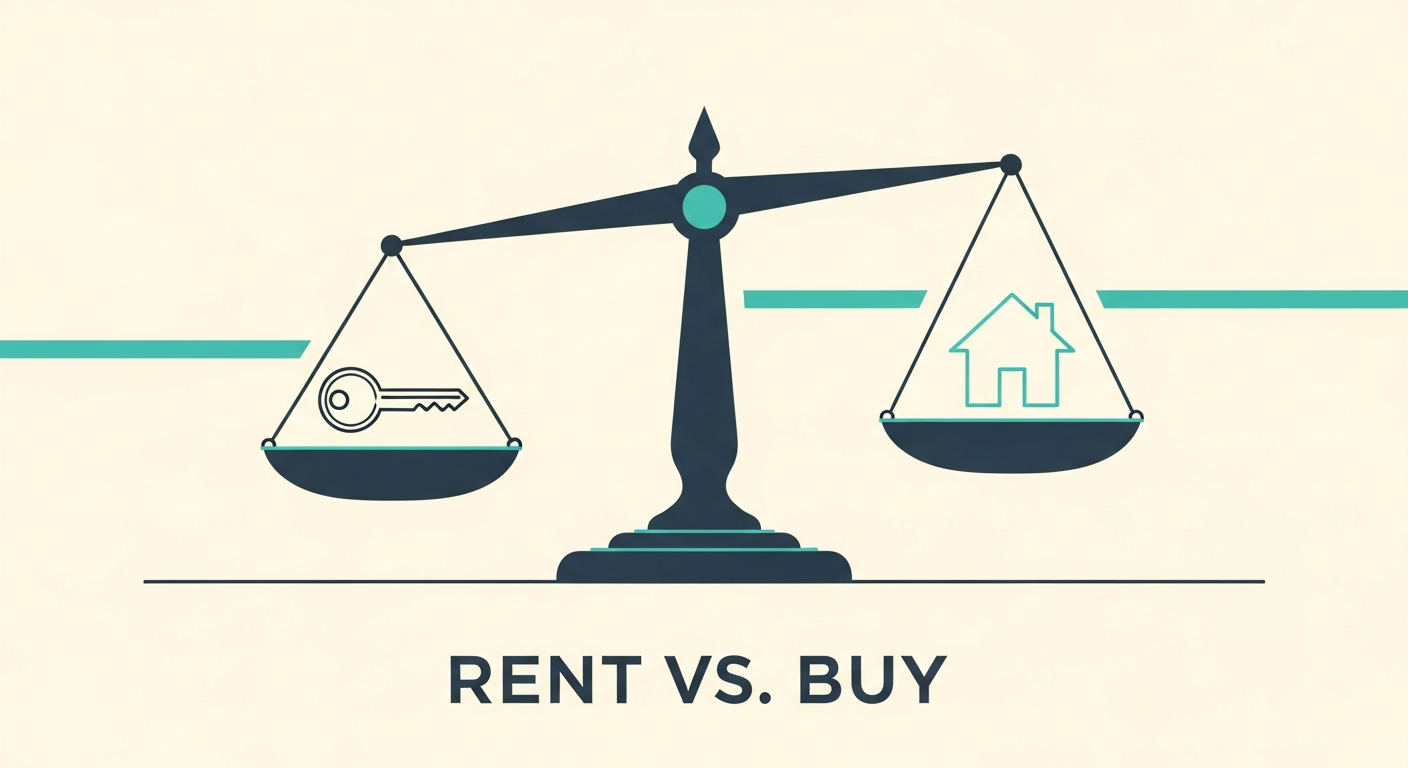
The Monthly Math on Renting vs. Buying Has Flipped. Here is What That Means.
← Back to all postsFrom 2015 to 2021, buying a home was cheaper on a monthly basis than renting one in most of the country. That is no longer true. According to Zillow, a new buyer today pays roughly $400 more per month than a renter when you factor in taxes, insurance, maintenance and a 20% down payment. In Los Angeles, San Francisco and other major metros, that gap runs to thousands of dollars a month.
That is a real shift and it deserves a straight answer rather than a sales pitch. So here is my honest read on where things stand.
Inspired by: The Economist, January 7, 2026
Why the Fed Cutting Rates Did not Help You
A lot of buyers have been waiting for the Federal Reserve to cut rates and bring mortgage costs down. The Fed has cut. Mortgage rates have barely moved.
The reason is that 30-year mortgage rates track long-term bond yields, not the Fed's short-term policy rate. Ten-year Treasury yields have stayed stubbornly elevated because markets are pricing in persistent government debt concerns and the possibility that inflation is not fully beaten. The result is that 30-year mortgage rates are still above 6% — more than double the pandemic lows — even after multiple Fed cuts. That gap between expectations and reality has left a lot of would-be buyers stuck.
This matters because the monthly cost of owning does not improve until long-term rates come down. There is no obvious near-term catalyst for that to happen.
The Opportunity Cost Most People Ignore
There is another piece of the math that rarely gets discussed honestly. When you buy instead of rent, you are not just paying a higher monthly cost. You are also locking up a large down payment in an illiquid asset.
Research from the University of Northern Iowa found that even during the period from 1984 to 2013 — when house prices rose and mortgage rates fell — renters who invested the difference between their rent and what a mortgage would have cost came out ahead in three of six metro areas studied. Stocks and bonds compounded. Home equity did too but not always faster.
That does not mean renting always wins financially. It means the comparison is closer than most people assume and the answer depends on your specific numbers, your market and your timeline.
When Buying Still Makes Sense
The monthly math currently favors renting in most markets. That is true. Monthly math, however, is not the only math.
A fixed-rate mortgage locks your principal and interest payment for 30 years. Your landlord can raise your rent. In Southern California, rents have climbed significantly over the past decade and there is no structural reason to expect that to stop. If you buy today at 6.5% and rates fall to 5% in three years, you can refinance. If you rent for three years waiting for rates to fall, you have paid rising rent with nothing to show for it and you still have to buy at whatever price the market is at then.
Long-term owners in California have built real wealth. The equity that homeowners hold versus renters is not a myth — the average homeowner has roughly 43 times the net worth of the average renter and a large part of that gap comes from home equity accumulated over time.
Buying makes sense when your time horizon is long enough (seven or more years is the general threshold), your payment fits comfortably within your income and you have reserves left after the down payment. It also makes sense if a fixed, stable cost matters to you practically — if you have kids in a school district, if you need a yard, if you want to paint the walls and not ask permission.
What This Means for You Right Now
If you are on the fence, the question is not "is renting or buying better?" in the abstract. It is whether the specific home you are considering at the specific price and rate available to you makes sense for your income and your plans.
That is a calculation worth doing carefully before you decide. I run through it with clients regularly and it is always free. Call or email me and we will put your actual numbers on paper.
Rates shown are for illustrative purposes only and are not a commitment to lend. Actual rates depend on credit profile, loan type, property type and market conditions. Not all borrowers will qualify.